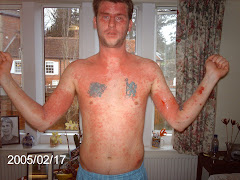
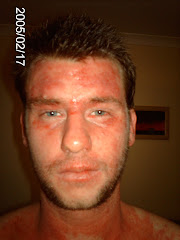
Phototherapy
Phototherapy: A Treatment Option for Some Types of Eczema
Phototherapy exposes a patient to ultraviolet (UV) light for a controlled amount of time and may be prescribed to treat moderate to severe:
Atopic dermatitis
Contact dermatitis
When prescribed, phototherapy is likely to be part of a total treatment plan. Typically, a treatment plan includes lifestyle modifications to prevent flare-ups, topical (applied to the skin) treatment, and if needed, stronger therapy, such as medication that is swallowed or injected.
Two types of phototherapy are used to treat eczema:
UV light therapy
PUVA (also called chemophototherapy)
UV Light Therapy
This may be used alone or with a topical treatment, such as coal tar. Ultraviolet A (UVA), ultraviolet B (UVB) or a combination of UVA and UVB therapy may be used. During therapy, the patient's body, or just the affected skin, is exposed to the UV light. Goggles are worn during treatment to protect the eyes. Patients usually receive treatment in a dermatologist's office.
There are two types of UVB therapy:
Broadband (3-5 treatments per week)
Narrowband (2-3 treatments per week)
Broadband - This UVB therapy has been around for more than 80 years, and it is still highly effective. The biggest drawbacks are that the patient must travel between 3 and 5 times per week to a site that offers this therapy and that broadband light does not effectively treat the scalp and areas where skin folds occur.
Narrowband - This newer form of UVB therapy is called “narrowband” because it emits a narrower band of UVB wavelengths. Narrowband UVB therapy is proving more effective than the traditional broadband therapy. However, it does have the potential to produce severe burning. Like broadband, it is still not known if narrowband UVB therapy poses a long-term risk for development of skin cancer.
PUVA
PUVA combines medication with light therapy and stands for "psoralen" + "UVA". Psoralen is a prescription medication that makes the skin more sensitive to UVA rays. Before UVA exposure, the patient swallows, bathes in, or applies psoralen to the skin. After treatment, patients must wear UVA-blocking sunglasses for 1 or 2 days when exposed to sunlight because psoralen remains in the eyes for a while.
PUVA's effectiveness is limited to carefully selected patients whose condition is likely to respond to this therapy. PUVA has a number of side effects, which may include nausea, headache, fatigue, burning skin, itching, and irregular skin pigmentation. A series of treatments is usually needed, and a full course of treatment may take six months. In several studies, patients have had substantial improvements when PUVA was combined with topical corticosteroids.
Why Phototherapy Works
UV light of certain wavelengths affects the immune system. By carefully exposing patients to these UV wavelengths for specified amounts of time, dermatologists are able to prevent the exaggerated immune response that causes the inflammation.
Benefits
The beneficial effects of phototherapy vary from person to person. Phototherapy can:
Significantly improve, and even clear, atopic dermatitis. One study conducted in Germany investigated the effects of phototherapy on severe atopic dermatitis. Investigators found more than 80% of the patients with atopic dermatitis who were treated with phototherapy showed significant improvement, and in some cases, complete clearance within three weeks.
Help prevent bacterial infections, which are common in the skin of patients with atopic dermatitis.
Reduce the strength of topical corticosteroids required, and in some cases, eliminate the need for topical corticosteroids.
Risks
While phototherapy can significantly improve a patient's skin and even completely clear atopic dermatitis in some cases, phototherapy does carry these risks:
UV light is a contributing cause of skin cancer
UV light has been proven to prematurely age the skin
Dermatologists Carefully Weigh Risks and Benefits
Phototherapy is not appropriate for every patient who has eczema. It is not recommended for patients whose eczema flares when exposed to sunlight or anyone who develops a sun-induced allergic reaction. In some patients, phototherapy can worsen eczema.
Dermatologists have the medical training and experience needed to carefully weigh the risks and benefits of phototherapy to determine if this treatment is right for a patient. In considering whether or not phototherapy is appropriate, dermatologists look at a number of factors, including the patient's age, health, medical history, severity of the condition, and history of previous treatment.
Tuesday, 5 August 2008

Saturday, 26 July 2008
PHOTOTHERAPY
I had an email from Brooke, who has recently started phototherapy. Brooke is very pleased with the results she has had so far. I had will post some information on the treatment in my next post. I had UV treatment up the local hospital and it worked well for me too but unfortunately as soon as I stopped the treatment my eczema returned
Wednesday, 23 July 2008
Been very Lazy/Busy
I have been very busy at work recently and too lazy to blog once I have got home plus I have been in the process of putting in a new bathroom suit at home which I have still not finished but I am determined to keep up the blog now I am back online!!
Saturday, 3 May 2008
Thank you Candy Fu
I would like to thank Candy Fu for submitting a bio for the main site!!
I am glad it looks like the summer is starting as the sun is great for my skin
I am glad it looks like the summer is starting as the sun is great for my skin
Wednesday, 23 April 2008
Thanks Carlye
I would like to thank Carlye Schuler for submitting a bio to the www.our-eczema.com web site it is really appreciated.
Hayfever
Well, my eczema and hay fever are really doing my nut in today!. My eyes are sore and my skin is driving me mental. Just been for some fresh air and a round of golf to calm down. Drove like Woods!!
Sunday, 6 April 2008

Rough
Well I have been struck down with 'man flu' or a heavy cold this could be the reason for my flare up during the week. My skin often flares up prior to an illness or bug as my body struggles to fend it off when I am run down!!.
Tuesday, 1 April 2008
Eczema on my face!!
 Struggling today and I have no idea why, Sore patch under my eye which has been there for ages now, I have sore eye lids on both eyes. My neck is itchy and I am waiting for something to appear there and my forehead is starting to go red so not happy, because things have been great recently!!
Saturday, 29 March 2008

Thursday, 27 March 2008
Here is an interesting article for those of you who suffer more during the summer!
It is summertime and you ought to be enjoying the sunny weather and all. Yet, for those of you with eczema, that is hardly the case.
Eczema usually worsens this period because of the heat and humidity. You tend to get excessive sweating if you have the most common kind of eczema called atopic eczema or atopic dermatitis. You are inclined to scratch yourself due to the itch caused by the sweat on your skin. Of course, on the reverse end, there are those with eczema that experience greater discomfort during the cold and dry months of winter.
For those of you that get intense itches during summer, here are some tips to help you control your eczema during summer.
It is important to avoid the heat as much as possible in order to avoid overheating. Staying cool will ensure that you sweat very little. Sunlight during summer is strongest between the hours of 10am and 4pm with the 12pm to 2pm period being exceedingly hot especially in the sun. Try to schedule your outdoor activities like lawn or gardening work, walks, etc. either in early morning or in the evening when things are cooler. Apart from the heat, direct sunlight also saps your strength and people with weak immune systems will overheat faster. If you feel tired, then take a nap in the afternoon to recover lost energy.
Itching is not easy to control for everyone. For those who find they just cannot help itching, please keep topical medication close by. However, make sure that you use them as sparingly as possible. There are also some new anti-inflammatory drugs, like Elidel and Protopic that contain no steroids that are very good at controlling eczema.
If you are going to be exposed to direct sunlight, always wear a hat and sunglasses. You have to be extra careful about using sunscreen as they may worsen or irritate your skin if you select the wrong brand or type. You may wish to try out several brands of sunscreens to find the one that best suits your skin. Best is to avoid being in direct sunlight altogether if you are not able to find a suitable sunscreen.
Do not be fooled if you are in water. Sunburn while swimming is usually faster than in dry direct sunlight. So if you are in a pool, ocean, or lake then you may even have to consider wearing a tee-shirt over your bathing suit. Keep your arms and chest areas covered. Even on cloudy days, ultraviolet rays can cause a burn. On cloudy days wear long pants and full-sleeved garments to cover up.
Hot days can also mean make you thirsty. Drink plenty of water to keep your body temperature cool. Unsweetened drinks are best; so plain water is recommended above ice cold lemonade.
It is not easy to keep your eczema itches under control during summer. You may even feel depressed especially when everyone else appears to be enjoying the good weather outside. It is therefore important to take things in stride. Adopt the above tips and you will begin to feel much better!
Eczema usually worsens this period because of the heat and humidity. You tend to get excessive sweating if you have the most common kind of eczema called atopic eczema or atopic dermatitis. You are inclined to scratch yourself due to the itch caused by the sweat on your skin. Of course, on the reverse end, there are those with eczema that experience greater discomfort during the cold and dry months of winter.
For those of you that get intense itches during summer, here are some tips to help you control your eczema during summer.
It is important to avoid the heat as much as possible in order to avoid overheating. Staying cool will ensure that you sweat very little. Sunlight during summer is strongest between the hours of 10am and 4pm with the 12pm to 2pm period being exceedingly hot especially in the sun. Try to schedule your outdoor activities like lawn or gardening work, walks, etc. either in early morning or in the evening when things are cooler. Apart from the heat, direct sunlight also saps your strength and people with weak immune systems will overheat faster. If you feel tired, then take a nap in the afternoon to recover lost energy.
Itching is not easy to control for everyone. For those who find they just cannot help itching, please keep topical medication close by. However, make sure that you use them as sparingly as possible. There are also some new anti-inflammatory drugs, like Elidel and Protopic that contain no steroids that are very good at controlling eczema.
If you are going to be exposed to direct sunlight, always wear a hat and sunglasses. You have to be extra careful about using sunscreen as they may worsen or irritate your skin if you select the wrong brand or type. You may wish to try out several brands of sunscreens to find the one that best suits your skin. Best is to avoid being in direct sunlight altogether if you are not able to find a suitable sunscreen.
Do not be fooled if you are in water. Sunburn while swimming is usually faster than in dry direct sunlight. So if you are in a pool, ocean, or lake then you may even have to consider wearing a tee-shirt over your bathing suit. Keep your arms and chest areas covered. Even on cloudy days, ultraviolet rays can cause a burn. On cloudy days wear long pants and full-sleeved garments to cover up.
Hot days can also mean make you thirsty. Drink plenty of water to keep your body temperature cool. Unsweetened drinks are best; so plain water is recommended above ice cold lemonade.
It is not easy to keep your eczema itches under control during summer. You may even feel depressed especially when everyone else appears to be enjoying the good weather outside. It is therefore important to take things in stride. Adopt the above tips and you will begin to feel much better!
Monday, 24 March 2008
Still tea total
High chaps
Well I am back from Glasgow, had a great time and managed not to have a single beer so I am well pleased with that. The lack of alcohol in the last 3 months has definately helped my skin.
Well I am back from Glasgow, had a great time and managed not to have a single beer so I am well pleased with that. The lack of alcohol in the last 3 months has definately helped my skin.
Wednesday, 19 March 2008
Working hard this week
Sorry not much time for me to post this week. I am working hard with Parky in Swindon all week then I am off to Glasgow for the weekend.
Monday, 17 March 2008


Sunday, 16 March 2008

Friday, 14 March 2008
A herbal 'cure' for eczema
I read an interesting Article in the Daily Mail today about treating eczema with a combination of Chinese herbs.Read on below:
A herbal 'cure' for eczema
A cocktail of Chinese herbs used by the Chinese for thousands of years could combat the painful skin condition of eczema, scientists claim. They say the potion containing five raw herbs reduced suffers need for conventional medicines and improved the quality of life for those being treated for atopic eczema.
It is the most common form of skin condition, affecting 10 per cent of children and around 3 per cent of adults. Dermatologists at the Chinese University of Hong Kong found the mixture- which contained Japanese honeysuckle, peppermint, root bark of tree peony, underground stem of the atractylodes herb and bark from an Amur cork tree - had a dramatic improvement on eczema sufferers aged 5 to 21
During the study, 85 patients were given either a tablet containing the herbs or a placebo.
Those who took the traditional Chinese medicine said their quality of life improved by a third, while those taking the placebo reported no improvement, the British Journal of Dermatology reports.
Researchers also revealed the herbal remedy reduced patients need of conventional treatments such as steroids, by an average of four days a month.
It is thought the herbs reduced the effects of four proteins and cytokines believed to cause eczema, they added.
Nina Goad, of the British Association of Dermatologists welcomed the findings but warned against using the herbs without first consulting a doctor. 'Some retailers may not be reputable and the product maybe of low standard' she added.
Stressed and itchy
Had a stressful day at work today nothing is going right on the new job Parky and I have just started and the price is rapidly going out of the window. I have been very itchy today and I think it is the stress that has caused it!!!!.
Subscribe to:
Posts (Atom)
 My StumbleUpon Page